Wilburt Lee Reliford • Seems Like a Dream
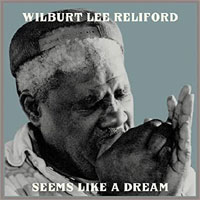 ecord producer Sam
Phillips described his first encounter with the music of blues legend Howlin’ Wolf by
recollecting what he said to himself: “This is for me. This is where the soul of man
never dies.” That pretty well sums up my reaction to the performances of a
lesser-known blues master named Wilburt Lee Reliford, captured here on Seems Like a
Dream, a remastered collection of 1989 field recordings of the late North Mississippi
harmonica player, singer and guitarist. The posthumously mixed arrangements of
Reliford’s songs feature the backing of a crack team of modern blues musicians and
make it clear that this relatively obscure artist's talents might well have earned him
wider acclaim if circumstances had broken his way. Seems Like a Dream is no
paint-by-the-numbers session. Reliford’s songs are as dark and rich as the soil of
his home. ecord producer Sam
Phillips described his first encounter with the music of blues legend Howlin’ Wolf by
recollecting what he said to himself: “This is for me. This is where the soul of man
never dies.” That pretty well sums up my reaction to the performances of a
lesser-known blues master named Wilburt Lee Reliford, captured here on Seems Like a
Dream, a remastered collection of 1989 field recordings of the late North Mississippi
harmonica player, singer and guitarist. The posthumously mixed arrangements of
Reliford’s songs feature the backing of a crack team of modern blues musicians and
make it clear that this relatively obscure artist's talents might well have earned him
wider acclaim if circumstances had broken his way. Seems Like a Dream is no
paint-by-the-numbers session. Reliford’s songs are as dark and rich as the soil of
his home.
Born in 1924, Reliford grew up around the bars of Chulahoma, Mississippi, copping licks from the likes of Mississippi Fred McDowell, Katherine Holloway and John Lee “Sonny Boy” Williamson. In addition to the usual hardships of living in the pre-civil-rights-era South, Reliford was plagued by Bright’s disease, a malady that cost him the sight of one eye. Then, when Reliford was 11, a doctor tasked with treating the illness, mistakenly removed the wrong eye, rendering him completely blind. In interviews, Reliford said this early tragedy led to his remarkable ability to make the harmonica sound like a crying soul. One listen to tracks like “Rock Me” and “Call Mama” and you’ll realize Reliford’s claim is no brag. Reliford’s plaintive vocal presentation is pitched a bit higher than that of Mississippi contemporaries like R.L. Burnside and Junior Kimbrough, landing closer to the back-of-the-throat sound of Jimmy Reed. While these sessions clearly resonate with the hypnotic pulse of Mississippi’s North Hill Country style, comparisons begin to falter when Reliford throws down his lyrics with a preacher’s passion. His compositions have a flavor all their own. Kudos must also go to co-producer Bruce Watson and guitarist Will Sexton (brother of Bob Dylan sideman Charlie Sexton) for providing a sonic chug and churn that give plenty of room for Reliford’s complaints and celebrations to be fully appreciated. There’s not a hint of overproduction here, and the result is pure, unadulterated juke-joint blues. Featuring drummer George Sluppick, bassist Mark Stuart and keyboardist Rick Steff, the title track exemplifies what makes this record an ideal choice for a night of drinking, card playing and bedroom entertainment. In interviews with the Dutch music researcher and recording archivist Ko de Kort, Reliford explained that he wrote much of his music to keep irritable gamblers happy, the dance floor full and the barkeep busy. More than 28 years after Reliford’s death, the music on Seems Like a Dream still checks all of those boxes. This record also highlights how closely the North Hill Country style embodies the guitar influences and polyrhythmic signatures of West Africa, the original home of so many Mississippi musicians’ enslaved ancestors. An additional surprise about this release is the excellent job Big Legal Mess Records has done with the vinyl. Given that this is a relatively small indie label based out of Oxford, Mississippi, it’s impressive that the vinyl is actually quieter, flatter and more dynamically engaging than that of a number of big-label records I’ve heard this year. The music was recorded at Delta-Sonic Sound in Memphis, Tennessee, and producers Watson and Sexton made sure the album lacquers were cut by the renowned Jeff Powell at Take Out Vinyl, resulting in a disc that sounds a bit warmer and heftier than the 24-bit/48kHz digital stream on Qobuz. While much of this year’s media attention has
focused on Delta Kream, the Black Keys’ worthy and heartfelt homage to
Mississippi’s blues canon, music fans who really want to get at the taproot of this
most American of musical genres should also buy a copy of Seems Like a Dream.
It’s the real deal. |