Masabumi Kikuchi • Hanamichi - The Final Studio Recording Vol. II
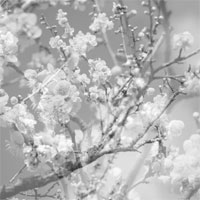
Kikuchi’s diverse style is hard to pin down. He’s recorded on electric piano with the Gil Evans big band; on a Philips recording, Tethered Moon -- Play Kurt Weill, an avant-garde session with bassist Gary Peacock and drummer Paul Motian; on a jazz fusion album, Poo-Sun; and on Black Orpheus, a live, solo piano recording on ECM from a little over a year before these sessions. His discography is extensive, with many titles available only as imports. Side one opens with the well-known Bossa Nova tune “Manhã de Carnaval.” Kikuchi gives a ruminative, intensely personal interpretation of this classic. Next comes the first of three free improvisations, “Improvisation II,” a flowing, restless journey leading to a sudden, unexpected conclusion. Next, “Alone Together,” a jazz standard from the 1930s, finds Kikuchi again journeying into sensitive places, as he totally transforms the tune. Closing the side, “Improvisation III” is free-flowing, seemingly seeking a key. It is relentless, with motifs emerging only to be subsumed by the chaos of the quest for resolution, which comes only within the last few bars. Side two’s opener, “I Loves You Porgy,” is an elegant journey into the magic of George Gershwin's mid-1930s ode to love. The piano becomes an orchestra of sound and expression. It is unlike any version of this song I’ve ever heard. “Improvisation IV,” at just under 12 minutes (the longest track on the album), has a tentative beginning, leading into a march-like section that in turn leads into a flighty sequence resolved temporarily by sustained lyricism. It descends into a free-form dance across the keyboard as Kikuchi’s fingers search for, and achieve, closure. Closing the album beautifully, “My Ship,” made famous by Miles Davis and Gil Evans on Miles Ahead, finds Kikuchi going deeply into Kurt Weill’s music to unveil a gorgeous song. On CD, the recording, engineered by Rick Kwan and mastered by Alex Bonney, sounds as good as any I’ve heard from digital. It allows the full range of the venue’s Steinway piano to sing in tangible presence and crystal-clear transparency, bringing the listener deeper into the music and Kikuchi’s vision. At least that’s what I thought before I cued up the LP, which brought me even closer to that vision. With apologies to Gertrude Stein, whom I paraphrase here, there was simply more “there” there on the LP. In other words, when compared to a reflection in a mirror, which is the CD's presentation, the LP presented the source of the reflection. The vinyl gave the sense of a real human seated at a piano, with the wood and metal of the piano more clearly imaged, as Kikuchi directed his fingers onto the keys. Also, the ambiance of the room where the recording took place was better sensed, with the experience of increased dynamics and detail retrieval, such as extra-musical sounds (humming, chair squeaks, etc.). The LP arrived in a beautiful matte-finish jacket festooned with the same black-and-white photo of cherry blossoms found on the CD. On the back are the track listing and recording details. Inside, on a separate sheet, are Ben Ratliff’s notes, the same as for the CD. The LP's dead wax did not reveal the pressing plant, but whoever it was should be commended for producing a heavyweight, perfectly flat, dead-quiet platter of transparent vinyl. Whichever format you choose, you’ll be rewarded with
intensely lyrical playing coupled with musical surprises. |



 little over four years ago, I reviewed what was the
first of two albums pianist Masabumi Kikuchi recorded just before his death in 2015. That
album,
little over four years ago, I reviewed what was the
first of two albums pianist Masabumi Kikuchi recorded just before his death in 2015. That
album, 