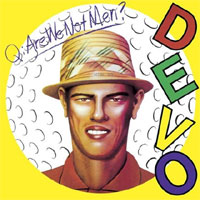
Devo • Q: Are We Not Men? We Are Devo! Warner Bros./Rhino RFH1 3239
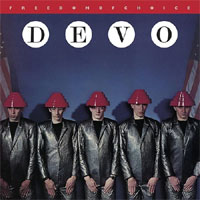
Devo • Freedom of Choice Warner Bros./Rhino RFH1 3435
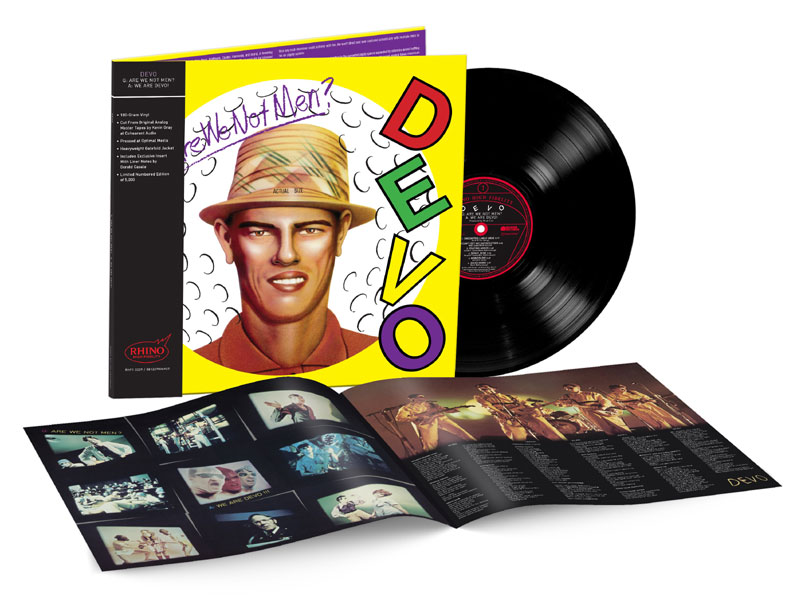
ariously called new wave, electronica, dance, and even punk, Devo's music was all of these and more, including healthy doses of performance art -- what would the band be without the kitschy costumes and headwear? -- subversive humor, inside jokes and social commentary. Devo is short for de-evolution, the idea that humanity isn't progressing -- it's actually in reverse. The band was formed in the early 1970s at Kent State University, where founders Mark Mothersbaugh and Gerald Casale studied art, in the shadow of the demonstrations and National Guard shootings that helped define the turbulent 1970s in the US. Given the state of the world then (and now), it's hard to argue that de-evolution wasn't (and isn't) happening. So the reissue of these LPs seems well timed and is perhaps a sign that Devo has finally achieved widespread understanding and acclaim. It's difficult to hear "(I Can't Get No) Satisfaction," from Q: Are We Not Men?, a cover of the famous Rolling Stones song, and not admire how its quirky, jerky rhythm and staccato, warbling vocals underscore its message with a disarming charm. Q: Are We Not Men? was the band's debut album, produced by Brian Eno, and has some of the most iconic songs. I first heard "Uncontrollable Urge" when Devo played it live on Fridays, ABC's attempt to challenge Saturday Night Live. Its chorus -- the word "Yeah" quickly screamed multiple times -- was both wickedly funny and audacious, and also logical, given the song's title. "Jocko Homo" is both Devo's purpose statement and anthem, its chorus, "Are we not men?", courtesy of H.G. Wells and Island of Lost Souls. Freedom of Choice, Devo's third release, launched the band into the MTV age with its biggest hit. Initially, Warner Bros. promoted "Girl U Want," because of its bendy synth line, but "Whip It," with its chugging beat, became a radio and TV mainstay. I've probably seen the video a hundred times. It's like a Bruegel painting -- there are so many fine points to catch, the band parodying the archetypes shown. Gerald Casale directed the video, and most of Devo's videos, and it shows just how talented a visual artist he was. Rhino is not new to producing carefully wrought reissues, both analog and digital. These LPs are from Rhino's High Fidelity series, which is over two dozen releases so far and growing. They are described as "high-end, limited-edition vinyl reissues of classic albums [that] represent the pinnacle of sound and packaging." They feature Kevin Gray's remastering and cutting of the lacquers from the master tapes, and 180-gram pressings from Optimal Media in Germany. The sound of these reissues is crisp and cleanly defined, bettering the original pressings in terms of presence, separation and transient impact. The pressings are super quiet, and the tip-on gatefold jackets are absolutely gorgeous -- heavy, glossy, the best available right now, and much nicer than those of original pressings. They feature large inserts with liner notes from Gerald Casale and Robert Margouleff, who coproduced and engineered Freedom of Choice, and obi-like spine covers that make them immediately identifiable. Freedom of Choice includes a replica of the original inner sleeve that touts Devo merch with a "Hey, kids," comic-book-ad vibe. The 5000 numbered copies of both titles are exclusive to Rhino's website. My only complaint is that the jackets are just a bit too large for most PVC outer sleeves, but sleeves for boxed sets will work.
I was a teenager when these two albums were released. The
music and the band's robotic, retro cool were acquired tastes for some, but for me they
were signs of someone with progressive views, a distrust of conformity, and a
well-developed sense of humor. If you want to tap into all of this while keeping your
audiophile cred intact, get these LPs. Original pressings of Devo albums aren't difficult
to find or expensive, but I've already begun watching Rhino's website for High Fidelity
versions of Duty Now For the Future, New Traditionalists and Oh No!
It's Devo. |