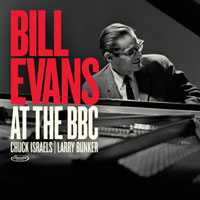
Bill Evans • Bill Evans At The BBC
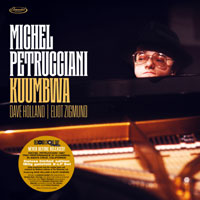
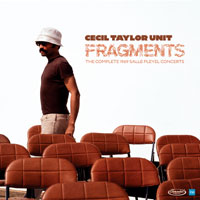
Michel Petrucciani • Kuumbwa Elemental Music 5990559 Cecil Taylor Unit • Fragments: The Complete 1969 Salle Pleyel Concerts Elemental Music 5990555
ev Feldman became a record-collector's household name through his many releases for Record Store Day (RSD) and Black Friday. His nickname, “the Jazz Detective,” helps explain why those dozens of releases were so noteworthy. Feldman unearthed important “lost” concerts from the likes of Art Tatum, Chet Baker, Wes Montgomery, Wynton Kelly, Cannonball Adderley, Sun Ra, and many other notables, for release on his own Resonance Records label or for other labels, like Elemental Music and Deep Digs Music. Many are now long out of print on both LP and CD. For Record Store Day 2026 on Saturday, April 18, Feldman has outdone himself. There are eleven new releases he's involved with, including these three from a trio of rather different pianists. Bill Evans needs no introduction, as his recording catalogue is long, deep and full of important titles under his own leadership and that of others. Like Evans, Michel Petrucciani is a purveyor of the piano trio -- piano, bass and drums. He was a contemporary follower of Evans while also having a personalized approach to improvisation. Cecil Taylor was a pioneer of free jazz -- music with a vastly different improvisational structure than the swing, bop and hard bop that most listeners know. In some ways, these three titles provide a roadmap for understanding the ways in which jazz evolved over the course of more than 70 years. As its title loosely implies, Bill Evans at the BBC is the soundtrack for episodes of a BBC television show, Jazz 625, hosted by trumpeter Humphrey Lyttelton. The show ran from April 1964 to August 1966, its title cryptically referring to the 625 horizontal lines of resolution for UHF broadcasting. The show presented performances from many top-flight jazz acts, including Duke Ellington, Dave Brubeck, Thelonious Monk, the Modern Jazz Quartet, and Art Blakey and the Jazz messengers. The Bill Evans episodes ran on May 12 and December 29, 1965; they were available on LaserDisc, which I owned thirty years ago, and DVD. You can also find clips on YouTube. Evans plays with bassist Chuck Israels and drummer Larry Bunker, with whom he toured and recorded throughout the 1960s. If you are familiar with Evans's most famous trio recordings, you will know a good amount of the music here. Especially well represented is Explorations, the final recording of jazz's most famous trio: Evans with bassist Scott LaFaro and drummer Paul Motian. “Israel, “Elsa,” “How Deep is the Ocean” and “Nardis” are instantly recognizable. The music ends with “Waltz for Debby,” perhaps Evans's best-known composition. Over the course of more than 90 minutes, the trio is exactly as you'd want to hear it: not playing as individuals but as a single distinct voice. The applause brings a feeling of camaraderie, and Lyttleton's interjections are welcome, even when he takes a shot at rock'n'roll guitarists. Michel Petrucciani's osteogenensis imperfecta, a bone disease that stunted his growth and caused him constant pain, didn't prevent his musical gifts from shining. He was one of most renowned, most Bill Evans-like jazz pianists of the 1980s and 1990s. Kuumbwa is both a nonprofit arts organization and a performance venue in Santa Cruz, CA. Petrucciani played there in 1987, during his prime, along with drummer Eliot Zigmund and bassist Dave Holland. It's interesting to compare “Stella By Starlight” and “Autumn Leaves” to Evans's own versions on the RSD 2021 release Behind The Dikes: The 1969 Netherlands Recordings. Petrucciani swings harder, then travels off into harmonic improvisations that are decidedly unEvansian. Now for something completely different. Fragments collects three performances of Cecil Taylor's quartet, called the Unit, at the 1969 Paris Jazz Festival. Taylor plays with Jimmy Lyons on alto sax, Sam Rivers on tenor and soprano saxes as well as flute, and Andrew Cyrille on drums. The three sessions are long improvisations that are free of titles, other than those on the record jacket that indicate which part of each set they are. This is challenging music for sure, but the real challenge for listeners, especially ones not familiar with free jazz, will be giving themselves over to what's happening in order to appreciate it. As artists of all kinds sometimes say, disorder is simply a different kind of order, and that applies in a fundamental way to free jazz. My advice for enjoying these sides is to clear your mind and defocus, embrace surprise, and listen to the ensemble as a single entity. Be patient. When I was in college, I sometimes played records by the Art Ensemble of Chicago, another free-jazz ensemble. I grew to like them, but my roommates absolutely hated them, proving that some listeners will never warm up to such coldly intellectual music. The music for all three releases was transferred from the original tapes, with mixing and sound restoration by Marc Doutrepont of EQuuS. Matthew Lutthans handled the LP mastering at the Mastering Lab. There is no indication of where the quiet 180-gram LPs were pressed, but Memphis Record Pressing or Le Vinylist in Quebec, Canada, are good guesses, as they are where some of Elemental Music's earlier RSD releases were pressed. There are 5500 copies of Bill Evans at the BBC and 2500 of Fragments. There is no indication of the pressing run for Kuumbwa, but somewhere around 2500 is probably correct. All three titles will be available on CD later this month. The sound of Kuumbwa and Fragments is textured and spacious, making up for a lack of low-end impact with solid imaging and a good sense of atmosphere. Bill Evans at the BBC has obvious tape issues that are most prominent throughout the first episode, LP sides A and B. There are bursts of raspy distortion that sound like a buildup of dust on the stylus. While there is some of this with Evans's piano throughout episode two, sides C and D, it's not as loud and far less distracting. All three collections include full-color large-format booklets with biographical information and reminiscences from musicians. They are great reading and augment the listening. You won't find Kuumbwa listed among the RSD 2026
releases, because it is only available for Record Store Day in the EU. Among Zev Feldman's
other RSD projects are a reissue of the debut album from bassist Buster Williams and a
pair of live sets from Terry Callier and Freddie King -- in addition to more great unknown
jazz. As with Record Store Day in general, show up early to get the titles you want, and
if you miss them, check out RSD
MRKT beginning early Sunday, April 19, for a second chance. |
|||||||||||||||||||||||||||||||||||||||||||||||||||||||||||||||