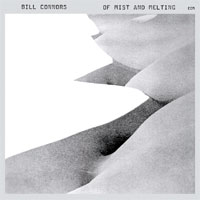
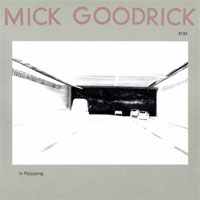
Bill Connors • Of Mist And Melting ECM Records ECM 1120 Mick Goodrick • In Pas(s)ing ECM Records ECM 1139
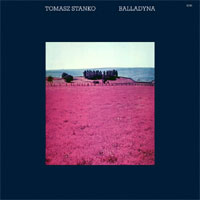
Tomasz Stanko • Balladyna
hen musician, producer, and recording engineer Manfred Eicher launched ECM Records in 1969, he could hardly have known he was founding one of the great music labels of the twentieth and twenty-first centuries. ECM's full name, Editions of Contemporary Music, was deliberately broad enough to encompass the label’s diverse catalogue, which now exceeds 1700 titles. The music ranges across all types of jazz, modern chamber music, ambient, fusion, world music, vocals, and combinations of all of these. “Modern” may be the most convenient description, because so much of ECM’s music resists easy categorization. The roster is equally impressive. Headliners such as Keith Jarrett, Pat Metheny, Charlie Haden, Chick Corea, and Charles Lloyd are well known, but some of my favorite ECM recordings come from lesser-known pianists Bobo Stenson, Marcin Wasilewski, and Nik Bärtsch. From the beginning, Eicher has given musicians room to stretch and, just as important, permission to experiment. These three albums come from ECM’s Luminessence series, named after a Jan Garbarek album on which he improvises over string arrangements by Keith Jarrett. The vinyl-reissue series draws on ECM’s deep catalogue, giving listeners a second chance to own recordings that have been out of print for decades or, in some cases, have never appeared on vinyl. Many are cut from the original analog master tapes -- when tapes exist, given the number of fully digital recordings ECM has released. Guitarist Bill Connors is best known for his work with Chick Corea’s Return to Forever in the early 1970s. Of Mist And Melting puts him with ECM stalwarts Jan Garbarek on saxophones, Gary Peacock on bass, and Jack DeJohnette on drums. As a note on the back cover proclaims, all of the compositions are by Connors. The music is atmospheric in the best sense, with the four musicians blending their voices almost like wisps of smoke. Connors improvises with a light touch, sustaining notes and phrases, and giving them room to develop. This is slow, patient music that rewards patient, repeated listening; its subtleties and beauty become increasingly apparent the longer you listen. Mick Goodrick makes an interesting contrast with Connors, both as a guitarist and in the music on these albums. Goodrick spent much of his career as a teacher and recorded fewer than ten albums under his own name, despite having more than a hundred recording credits. Earlier this year, ECM released one of those albums, Feebles, Fables & Ferns, featuring Goodrick and pianist Fred Hersch in a session recorded in 1988. The title track, a Goodrick composition, also appears on In Pas(s)ing, Goodrick’s ECM debut. It is a strong, stylistically varied set, displaying elements of fusion and straight-ahead jazz along with free-form improvisation. The band includes saxophonist John Surman, bassist Eddie Gomez, and drummer DeJohnette, all of whom are in fine form. Compared with the inward, atmospheric quality of Of Mist And Melting, In Pas(s)ing is more traditional and solo-driven, with each musician given plenty of space for exploration. Polish trumpeter Tomasz Stanko became one of ECM’s major artists, with nearly a dozen releases for the label that demonstrated his creative range and embrace of contemporary music’s constantly changing, genre-bending aesthetic. Balladyna, his ECM debut from 1976, was his only recording for the label for more than a decade. The ensemble includes drummer Edward Vesala, saxophonist Tomasz Szukalski, and bassist Dave Holland, an ECM veteran whom Eicher brought to the session. This is exciting, horn-driven music, ranging from contemplative solos to trumpet-and-saxophone duos that erupt into all-out wails. Although Stanko is the leader, Szukalski is equally prominent, sometimes taking the lead. Every time I listen to Balladyna, I hear something new. It's challenging and prismatic, shifting from track to track while retaining a strong sense of overall purpose. The music on these three albums also illustrates another defining feature of ECM: its distinctive house sound that has long appealed to audiophiles. The formula includes a neutral, though slightly dry, tonal balance; a spacious and airy soundstage; finely drawn dynamic variations; and abundant low-level resolution. ECM’s sonic consistency is remarkable given the size and diversity of its catalogue. Normally with reissues, I would compare the sound with that of an earlier pressing (or two), but I cannot do that here, and I am not sure such a comparison would reveal anything new. The Luminessence LPs sound extraordinary and unmistakably ECM-like, with abundant inner detail, natural musical textures, a spacious soundstage, and finely resolved microdynamics. A sticker on the shrink wrap of each LP says it was pressed in Germany. That probably means Optical Media, whose pressings are consistently flat and very quiet. It's easy to spot ECM CDs and LPs at garage sales and
thrift stores. The label’s understated cover art -- sometimes just a solid block of
color with text -- is immediately recognizable. The LPs are almost always in exceptional
condition, thanks to the high-quality inner sleeves ECM used. I buy every one I find. But
finding a particular ECM title can be difficult, even at well-stocked record stores. That
is what makes the Luminessence series so welcome. It brings long-buried gems back into
circulation, giving listeners another opportunity to discover the label’s adventurous
music in the exceptional sound for which ECM is known. |